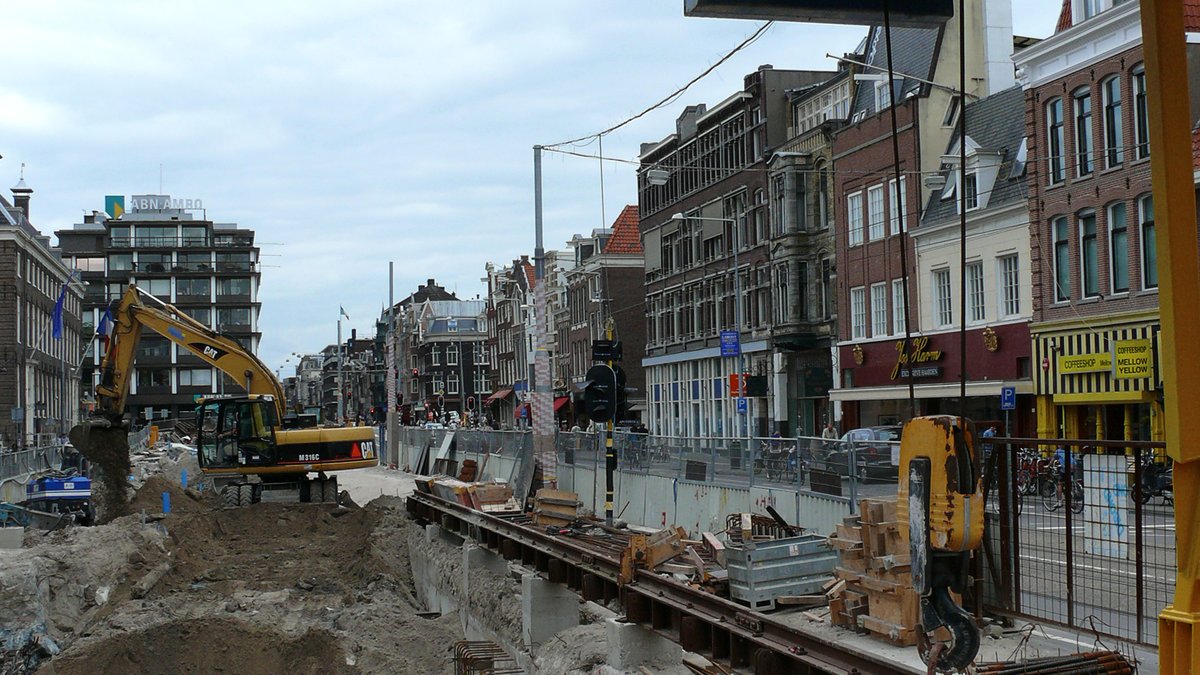
As urban density escalates and surface land becomes increasingly scarce, civil engineering is pushing downward. Tunnels and underground structures represent the most challenging, high-risk, and scientifically complex domain of modern infrastructure. Subsurface engineering demands absolute mastery over volatile geotechnical strata, groundwater hydrodynamics, immense lithostatic rock pressures, and advanced mechanized excavation technologies operating hundreds of meters beneath the surface.
Core Engineering Realities
- Geotechnical Supremacy: Unlike surface construction where engineers specify the building materials, underground engineering must work with nature’s material—the ground itself serves as both the primary load and the primary structural support mechanism.
- Mechanized Precision: Modern Tunnel Boring Machines (TBMs) are subterranean mobile factories, capable of excavating up to 100 meters of rock or saturated soil weekly while simultaneously installing watertight precast concrete liner rings.
- Multifunctional Subterranean Space: Beyond transport passages, underground infrastructure now encompasses deep metro transit hubs, subterranean stormwater attenuation super-tunnels, cryogenic gas caverns, and deep geological nuclear waste repositories designed to remain secure for 100,000 years.
Table of Contents
- 1. The Geotechnical Foundation: Soil and Rock Mechanics
- 2. Primary Tunneling Methodologies and Construction Techniques
- 3. Tunnel Boring Machines (TBM): The Subterranean Powerhouses
- 4. NATM and the Convergence-Confinement Principle
- 5. Ground Improvement and Cryogenic Ground Freezing
- 6. Underground Caverns and Multimodal Transit Hubs
- 7. Subterranean Fire Safety, Ventilation, and Life-Support Systems
- 8. Signature Global Case Studies
- 9. Frequently Asked Questions (FAQ)
- 10. Conclusion: The Subterranean Frontier of Human Civilization
1. The Geotechnical Foundation: Soil and Rock Mechanics
Every tunneling endeavor begins not with concrete or steel, but with geology. Tunneling engineers must accurately predict how geological formations will respond when an artificial void is bored through them under intense confinement pressures.
To understand the historical origins of subterranean engineering—from Persian gravity-fed qanats to Sir Marc Brunel’s shield beneath the Thames—explore our archival study on The Epic History of Human Civil Infrastructure.
Primary Geological Stress States
At depth, underground strata exist in a state of three-dimensional static equilibrium. The vertical stress ($\sigma_v$) is primarily driven by the lithostatic overburden—the physical weight of the overlying rock and soil column, scaling roughly at 25 to 27 kN/m³ per meter of depth. Simultaneously, tectonic forces and Poisson’s lateral expansion generate horizontal confining stresses ($\sigma_h$). When a tunnel void is created, these pre-existing stresses can no longer pass through the excavated volume; instead, they concentrate around the perimeter of the tunnel opening as hoop stresses. If these hoop stresses exceed the compressive strength of the surrounding rock, catastrophic rockbursts, squeezing, or tunnel wall spalling can occur.
Geomechanical Classification Systems
To quantify ground quality and determine necessary support regimes, geotechnical engineers rely on international classification frameworks:
- RMR (Rock Mass Rating): Developed by Bieniawski, RMR evaluates six fundamental parameters: Uniaxial Compressive Strength (UCS) of intact rock, Rock Quality Designation (RQD), joint spacing, joint condition, groundwater inflow, and joint strike/dip orientation relative to the tunnel alignment.
- Q-System (Norwegian Geotechnical Institute): Widely used worldwide for rock tunnel support design, the Q-value is computed from the formula:
Q = (RQD / Jn) × (Jr / Ja) × (Jw / SRF)
where Jn represents joint set numbers, Jr joint roughness, Ja joint alteration/clay infill, Jw water reduction factor, and SRF the Stress Reduction Factor (measuring squeezing, swelling, or rockburst conditions).
2. Primary Tunneling Methodologies and Construction Techniques
There is no universal method for tunneling; the chosen technique is strictly dictated by ground geology (soft clay, sand, gravel vs. hard granite or basalt), groundwater pore pressure, tunnel diameter, overburden depth, and surface settlement tolerances.
| Method | Best Ground Conditions | Excavation Mechanics | Key Advantages & Limits |
|---|---|---|---|
| Tunnel Boring Machine (TBM) | All ground types (customized for rock or soft ground) | Rotating cutterhead disc cutters / drag bits + segmental lining | Fastest advance rate; minimal surface disruption; high capital equipment cost |
| NATM / SEM (Sequential Excavation) | Variable rock, fractured strata, mixed ground | Staged mechanical / roadheader excavation + immediate shotcrete lining | Extreme flexibility for irregular shapes and station caverns; labor intensive |
| Cut-and-Cover | Shallow urban transit (depth < 25m) | Trench excavation from surface + cast box culvert + backfill | Economical at shallow depths; causes massive temporary surface disruption |
| Drill and Blast (D&B) | Competent medium-to-hard rock formations | Jumbo drill rigs bore blast holes + precision explosive charges | Low machinery mobilization cost; intermittent cycling; vibration concerns |
| Immersed Tube (IMT) | Subaqueous river and sea channel crossings | Prefabricated drydock concrete segments floated and sunk into dredged trench | Eliminates deep approach ramps; highly vulnerable to marine weather |
3. Tunnel Boring Machines (TBM): The Subterranean Powerhouses
Modern TBMs are marvels of mechanical, hydraulic, and electrical engineering, often weighing over 4,000 tonnes with diameters exceeding 15 meters. A TBM is an enclosed factory that performs three tasks simultaneously: face excavation, muck extraction, and permanent lining installation.
Earth Pressure Balance (EPB) vs. Slurry Shield TBMs
In urban soft ground with high water tables, preventing surface settlement (which could fracture skyscrapers or rupture gas mains) requires balancing the pressure at the tunnel face:
1. Earth Pressure Balance (EPB) Machines
Engineered for cohesive soils (clays, silts, and fine sands). The excavated soil inside the pressurized cutterhead mixing chamber is conditioned with polymer foams and bentonite to transform it into a plastic paste. An internal Archimedes screw conveyor controls the extraction rate, maintaining an exact hydrostatic equilibrium against the front face, completely preventing ground subsidence.
2. Slurry Shield TBMs
Deployed in coarse, permeable gravels, loose sands, and fractured rock under high hydrostatic water heads. Pressurized bentonite slurry is pumped into the excavation chamber. The bentonite forms an impermeable “filter cake” on the tunnel face, sealing off groundwater. The excavated cuttings are blended into the slurry and pumped through steel pipelines back to a surface separation plant, where muck is centrifuged out and clean slurry recycled.
The Universal Ring Segmental Lining System
Directly behind the TBM shield, a robotic vacuum erector arm lifts precast reinforced concrete segments (typically 6 to 8 segments plus a tapered key stone) and bolts them into a complete structural cylinder. High-performance elastomeric EPDM gaskets between each segment provide a 100% watertight seal against external groundwater heads up to 15 bar (150 meters of water pressure). Immediately after ring erection, cementitious pea-gravel grout is injected under high pressure into the annular void between the concrete ring and the excavated ground perimeter, locking the tunnel securely in place.
4. NATM and the Convergence-Confinement Principle
The New Austrian Tunneling Method (NATM), formally termed the Sequential Excavation Method (SEM), revolutionized civil engineering by abandoning the historic philosophy of building massive, rigid timber or steel frames to block ground movement. Instead, NATM transforms the surrounding geological mass into a self-supporting structural ring.
The Ground Reaction Curve (Convergence-Confinement)
When an underground cavity is excavated, the rock immediately starts to deform inward toward the void. NATM recognizes two opposing hazards:
- If you support the ground too quickly with infinite rigidity, you must resist the full, unyielding lithostatic weight of the entire mountain.
- If you allow the ground to deform too much, the rock mass fractures, loses its internal shear interlocking strength, and collapses.
The engineering art of NATM lies in controlled deformation: allowing the rock to relax just enough so that an arched compressive zone forms naturally around the perimeter, mobilizing the rock’s own shear strength. Once this equilibrium is reached, high-velocity sprayed concrete (shotcrete) combined with steel lattice girders, wire mesh, and radial rock bolts (friction stabilizers or resin-grouted steel bars) is applied to permanently lock the formation in place.
5. Ground Improvement and Cryogenic Ground Freezing
When tunnels must traverse treacherous geological anomalies—such as water-bearing fault zones, quicksand lenses, or unmapped urban utility fields—engineers deploy ground modification technologies to solidify the earth before excavation begins:
Artificial Ground Freezing (AGF)
Artificial ground freezing is the ultimate geotechnical contingency. Steel freeze pipes are drilled around the proposed tunnel boundary. Liquid nitrogen ($-196^\circ\text{C}$) or chilled calcium chloride brine ($-30^\circ\text{C}$) is continuously circulated through the subsoil. Over several weeks, the groundwater in the soil pores freezes into solid ice, creating a monolithic, impermeable ice wall with the compressive strength of structural concrete. Excavation proceeds safely within this frozen barrier, after which permanent concrete liners are cast before allowing the ground to thaw.
Jet Grouting and Deep Soil Mixing (DSM)
In permeable sands and gravels, triple-fluid jet grouting rigs drill down to tunnel depth and inject ultra-high-pressure water (400 bar) and air to shred the native soil structure. Simultaneously, cement grout is pumped through rotating nozzles, thoroughly blending native soil particles with Portland cement to create interlocking columns of hardened “soil-cement” or grout curtains with compressive strengths between 5 and 15 MPa.
6. Underground Caverns and Multimodal Transit Hubs
Beyond linear boreholes, modern underground infrastructure features massive excavated caverns designed for mission-critical functions:
- Subterranean Metro Stations: Modern subway stations (such as those on London’s Elizabeth Line or Grand Central Madison in New York) are cavernous engineering achievements carved beneath densely packed city centers. Construction requires complex top-down pilot drifts, crown bench excavations, and deep vertical access shafts up to 40 meters in diameter.
- Hydroelectric Underground Powerhouses: Carved deep inside solid mountain rock masses, these massive vaults house hydraulic turbines, generators, and transformers (such as the Robert-Bourassa underground plant in Canada, carved 137 meters underground to withstand explosive water pressures). (For more on how these turbine caverns interface with surface reservoirs, read our guide on Mega-Dams and Hydraulic Infrastructure).
- Common Utility Tunnels (CUT): Rather than repeatedly digging up city streets for water, electricity, fiber-optic, and steam repairs, modern smart cities install walk-through concrete utility super-ducts equipped with automated inspection drones, climate control, and dedicated maintenance access tracks.
7. Subterranean Fire Safety, Ventilation, and Life-Support Systems
The enclosed nature of underground structures makes fire and smoke management the foremost life-safety design priority. Tragic historical incidents, such as the 1999 Mont Blanc Tunnel fire, fundamentally reshaped global tunnel safety codes.
Life-Safety Critical Subsystems
- Ventilation Architectures: Modern road tunnels utilize longitudinal ventilation via high-thrust reversible ceiling jet fans, or full transverse systems with dedicated overhead air ducts and remote-controlled smoke dampers every 50 meters to extract toxic hot gases at the source.
- Pressurized Cross-Passages: Twin-tube railway and highway tunnels are connected by emergency cross-passages spaced every 250 to 500 meters. These escape tunnels are maintained under positive air pressure, preventing smoke ingress and allowing evacuees to walk safely into the unaffected adjacent bore.
- Passive Fireproofing Linings: Concrete exposed to hydrocarbon fires exceeding $1,000^\circ\text{C}$ suffers from “explosive spalling”—moisture trapped within the concrete matrix boils into superheated steam, causing the concrete cover to blow off violently and exposing the load-bearing rebar. Modern tunnels integrate polypropylene micro-fibers into the concrete mix. In a fire, the fibers melt at $160^\circ\text{C}$, creating microscopic capillary escape channels that relieve internal steam pressure, preventing spalling.
8. Signature Global Case Studies
Three mega-projects showcase the outer limits of underground civil engineering:
- Gotthard Base Tunnel (Switzerland): The world’s longest and deepest railway tunnel (57.1 km long, reaching 2,450 meters beneath the Alpine peaks). Engineers bored through 73 different geological formations, encountering rock temperatures up to $46^\circ\text{C}$ that required colossal industrial refrigeration plants to supply breathable air to workers.
- The Channel Tunnel (Chunnel – UK/France): Spanning 50.45 km with 37.9 km submerged beneath the English Channel. Eleven TBMs bored through the waterproof Chalk Marl stratum, guided by advanced satellite and sub-seabed laser gyroscopes that met at midpoint with an error of less than 35 centimeters. (Contrast this undersea railway with overwater marine spans in our guide to Bridges and Modern Infrastructure).
- Fehmarnbelt Fixed Link (Denmark/Germany): Currently under construction as the world’s longest immersed tube tunnel (18 km). Rather than boring, 89 colossal hollow precast concrete box elements (each weighing 73,000 tonnes) are manufactured in an industrial dry dock, floated into the Baltic Sea, lowered into a prepared seafloor trench, and sealed with hydraulic hydrostatic pressure.
9. Frequently Asked Questions (FAQ)
Q1: How do Tunnel Boring Machines navigate without GPS signals underground?
Since GPS signals cannot penetrate soil and rock, TBMs navigate using automated laser guidance systems, high-precision motorized total stations, and subterranean optical gyroscopes aligned to surveyed surface control points via vertical plumb-line shafts.
Q2: What is the biggest danger during tunnel excavation?
Sudden, unmapped water inrushes from high-pressure karst aquifers, catastrophic face collapse in soft saturated silts, and explosive rockbursts in ultra-deep hard rock tunnels represent the greatest geotechnical hazards.
Q3: How long do modern underground tunnel structures last?
Major transport and civil defense tunnels are routinely designed for a minimum structural design life of 100 to 120 years, with specialized waterproofing systems engineered to resist aggressive groundwater chemistry and hydrostatic heads indefinitely.
10. Conclusion: The Subterranean Frontier of Human Civilization
Tunnels and underground structures are quiet engineering marvels. By transforming impenetrable mountain ranges into high-speed transit arteries, moving utility lines beneath urban streets, and preserving surface ecosystems from sprawling infrastructure footprints, underground civil engineering represents the future of sustainable human habitation. As tunneling machines become smarter, autonomous, and capable of operating under unprecedented geological pressures, civil engineers will continue to expand the three-dimensional boundaries of our planet’s built environment.
4 thoughts on “Engineering the Subterranean: A Deep Dive into Tunnels and Underground Structures”