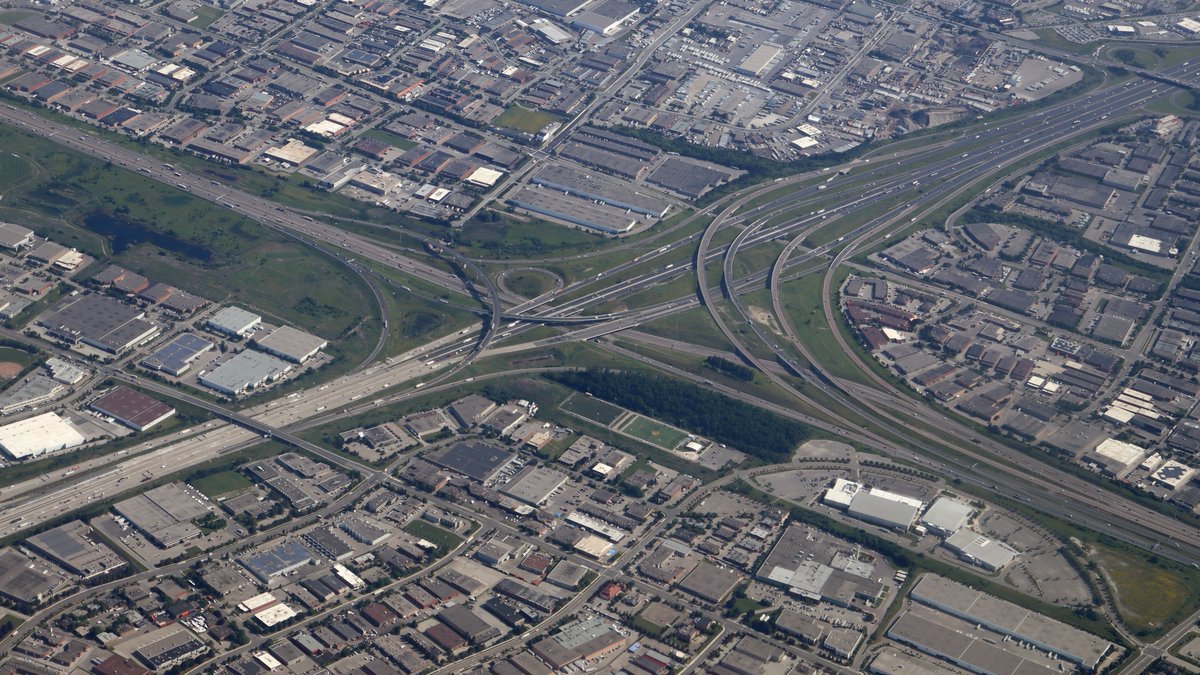
From the paved military routes of ancient Rome to multi-lane continental expressway systems, roads and highways are the primary lifelines of global commerce. Roadway engineering is a sophisticated discipline combining vehicle kinematics, geotechnical soil mechanics, polymer thermodynamics, stormwater hydrology, and intelligent digital control systems. Modern highway networks must carry millions of high-tonnage axle loads over decades while withstanding freezing cycles, torrential rains, and scorching heatwaves.
Core Engineering Dimensions
- Structural Pavement Dichotomy: Highways are fundamentally categorized into flexible pavements (layered viscoelastic asphalt) that distribute wheel loads through granular shear, and rigid pavements (hydraulic cement concrete slabs) that distribute loads via slab flexural bending.
- Geometric Kinematics: Road alignment is governed by precise mathematical curves—clothoid transition spirals, superelevated banks, and parabolic vertical curves—engineered to balance centrifugal acceleration against tire friction.
- Drainage Dictum: Water is the ultimate enemy of highway infrastructure. Without proper transverse camber, permeable sub-bases, and longitudinal collector drains, hydraulic pore pressure under heavy truck tires causes rapid subgrade pumping and catastrophic potholes.
- Smart Highway Transformation: Highways are evolving into active cyber-physical platforms incorporating in-pavement inductive EV charging, V2X connected communication nodes, automated incident detection, and self-healing asphalt technologies.
Table of Contents
- 1. Highway Geometric Design: The Kinematics of Alignment
- 2. Pavement Engineering: Flexible vs. Rigid Structural Systems
- 3. Highway Drainage Architecture: Controlling Hydraulic Forces
- 4. Intelligent Transportation Systems (ITS) and Traffic Control
- 5. The Next-Gen Smart Highway: Tech Innovations
- 6. Highway Maintenance, Lifecycle Analysis & Asset Management
- 7. Frequently Asked Questions (FAQ)
- 8. Conclusion: The Future of Connected Mobility Networks
1. Highway Geometric Design: The Kinematics of Alignment
Geometric highway design dictates the physical dimensions, curvatures, and spatial profile of a roadway. Its primary objective is to maximize traffic throughput and vehicular safety while minimizing earthwork excavation and environmental disruption.
For an overarching view of how highway corridors interface with major river crossings and viaducts, refer to our comprehensive primer on Bridges and Modern Civil Infrastructure.
Horizontal Alignment and Superelevation
When a vehicle negotiates a horizontal curve at high speed, centrifugal force pushes the vehicle radially outward. To counteract this force and prevent skidding or rollovers, civil engineers bank the outer edge of the roadway upward—a geometric technique known as superelevation ($e$). The basic physical equilibrium governing a curved highway is expressed as:
where e is the superelevation rate (typically limited to 6%–10% to prevent slow-moving vehicles or stopped trucks from sliding inward on icy surfaces), f is the side friction factor between tire rubber and asphalt, v is design vehicle velocity (km/h), and R is the horizontal curve radius (meters).
Transition Spirals (Clothoids)
A vehicle cannot instantaneously transition from a straight tangent section ($R = \infty$) into a sharp circular curve without violent lateral jerk. Therefore, engineers insert a mathematical transition curve—the Euler spiral or clothoid—where curvature increases linearly with length. This allows drivers to turn the steering wheel smoothly while the road cross-slope gradually twists from standard crown slope (typically 2% shedding rain outward) up to full superelevation bank.
Vertical Alignment and Sight Distances
Vertical geometry consists of crest curves (summits over hills) and sag curves (dips through valleys), connected by straight grade tangents:
- Stopping Sight Distance (SSD): The absolute minimum visible distance required for a driver traveling at design speed to perceive an unexpected obstacle, apply the brakes, and bring the vehicle to a complete stop. SSD factors in driver reaction time (standardized at 2.5 seconds) and vehicle deceleration friction.
- Crest Vertical Curves: Designed as quadratic parabolas where sight distance is governed by the driver’s eye height (standardized at 1.08 meters) and the height of an unexpected road object (standardized at 0.60 meters). Insufficient curve length results in blind summits that cause devastating multi-vehicle collisions.
- Sag Vertical Curves: At night, sight distance on sag curves is limited by vehicle headlight beam spread (typically tilted 1 degree upward with a mounting height of 0.6 meters).
2. Pavement Engineering: Flexible vs. Rigid Structural Systems
A highway pavement is a multi-layered structural platform designed to reduce the intense concentrated pressure of heavy truck tires (often exceeding 700 to 900 kPa) down to a level that the underlying natural soil (the subgrade) can support without permanent plastic deformation (typically under 50 kPa).
| Pavement Parameter | Flexible Pavement (Asphalt) | Rigid Pavement (Concrete) |
|---|---|---|
| Load Distribution Mechanism | Grain-to-grain contact shear through successive layers | Beam/slab flexural rigidity spreading load over a wide slab area |
| Standard Lifespan | 15 to 25 years before surface overlay | 30 to 50+ years with minimal structural intervention |
| Initial Construction Cost | Lower initial capital investment | Higher initial capital cost; complex jointing & curing |
| Failure Modes | Rutting (permanent deformation), fatigue cracking, raveling | Faulting at joints, corner breaks, transverse cracking, spalling |
| Maintenance & Rehabilitation | Rapid cold-milling and asphalt resurfacing overnight | Full-depth slab replacement; extended concrete curing downtime |
Anatomy of Flexible Pavements (The Superpave System)
Modern flexible pavements are engineered using the Superpave (Superior Performing Asphalt Pavements) methodology, which customizes asphalt binder chemistry based on local climate extremes:
- Subgrade: The compacted native subsoil or stabilized earth (treated with lime or cement) tested for California Bearing Ratio (CBR) and Resilient Modulus ($M_R$).
- Subbase Course: Layer of crushed gravel or reclaimed concrete that provides structural elevation, frost protection, and rapid drainage.
- Base Course: Dense-graded crushed stone or hot-mix asphalt base designed to absorb horizontal tensile stresses.
- Binder Course: Intermediate asphalt layer providing structural bulk and resistance to shear deformation.
- Surface / Wearing Course: High-performance asphalt mix (such as Stone Matrix Asphalt – SMA or Open-Graded Friction Course – OGFC) engineered with high macro-texture to prevent hydroplaning, reduce road tire noise, and resist rutting from heavy commercial truck axles.
Anatomy of Rigid Pavements: JPCP vs. CRCP
Rigid pavements utilize high-strength Portland cement concrete slabs resting on a lean concrete base:
- Jointed Plain Concrete Pavement (JPCP): Concrete shrinks as it hydrates and cures. To prevent uncontrolled cracking, contraction joints are saw-cut every 4.5 to 5 meters. Smooth, epoxy-coated steel dowel bars are placed across transverse joints to provide Load Transfer Efficiency (LTE)—allowing wheel loads to transfer smoothly to the adjacent slab while permitting thermal longitudinal expansion.
- Continuously Reinforced Concrete Pavement (CRCP): Constructed without any transverse contraction joints. Instead, heavy longitudinal steel rebar reinforcement is embedded continuously throughout the pavement. The concrete develops fine, hairline transverse cracks every 1 to 2 meters, held tightly closed by the internal steel, resulting in an exceptionally smooth, maintenance-free riding surface for the highest-density commercial trucking corridors.
3. Highway Drainage Architecture: Controlling Hydraulic Forces
The foremost maxim in transportation engineering is that “three things matter in road building: drainage, drainage, and drainage.” Water trapped within a pavement matrix reduces subgrade shear strength by up to 80% and accelerates pothole formation.
Hydraulic Control Elements
Transverse Crown Slope: Roadway surfaces are crowned with a 2.0% to 2.5% lateral cross-slope, shedding precipitation rapidly off travel lanes into side gutters.
Permeable Asphalt and Open-Graded Friction Courses (OGFC): Porous asphalt mixes containing 15%–22% interconnected air voids. Rainwater sinks immediately into the asphalt layer, flows horizontally along an underlying impermeable membrane, and discharges into roadside drains, completely eliminating dangerous tire spray and hydroplaning.
Subsurface Edge Drains & Geotextiles: Perforated PVC collector pipes wrapped in geotextile filter fabric installed along shoulder trenches to draw capillary groundwater away from the pavement base before freeze-thaw cycles can cause frost heaving.
4. Intelligent Transportation Systems (ITS) and Traffic Control
Building more lanes is no longer sufficient to solve urban congestion; modern highways must operate as intelligent, self-regulating cybernetic systems.
Core ITS Deployments
- Dynamic Ramp Metering: Sensor loops and computer-vision cameras embedded along highway on-ramps monitor mainline vehicular density. Traffic lights on the ramp meter the flow of entering vehicles, preventing traffic shockwaves that trigger phantom traffic jams.
- Variable Speed Limits (VSL): Digital overhead gantry signage dynamically lowers highway speed limits in advance of congestion, adverse weather, or lane closures. By homogenizing vehicle velocities and closing speed differentials, VSL stabilizes traffic flow and reduces secondary rear-end collisions by up to 35%.
- Open Road Tolling (ORT) & ANPR: High-speed toll gantries equipped with multi-lane overhead RFID readers and high-resolution Automatic Number Plate Recognition (ANPR) cameras assess tolls at full highway speeds (120+ km/h), eliminating stop-and-go toll plazas that waste millions of liters of fuel annually.
5. The Next-Gen Smart Highway: Tech Innovations
The road network of the next fifty years will be radically different from the passive asphalt ribbons of the past century. Highways are becoming active energy producers, automated mobility platforms, and self-repairing ecosystems.
1. Dynamic In-Road Wireless EV Charging
Electric vehicle adoption faces range and battery weight limitations, especially for long-haul freight trucks. Dynamic wireless power transfer (DWPT) embeds electromagnetic copper induction coils beneath highway asphalt lanes. As electric vehicles drive over these electrified corridors at highway speeds, a tuned high-frequency alternating magnetic field transfers power wirelessly across an air gap to an underbody vehicle receiver, charging the battery on the move.
2. V2X (Vehicle-to-Everything) Roadside Units
Highways are being retrofitted with dedicated 5G and C-V2X (Cellular Vehicle-to-Everything) Roadside Units (RSUs) mounted on lighting poles and sign gantries. These nodes communicate millisecond-level telemetry directly to autonomous vehicle computers—warning self-driving trucks of black ice around a bend, emergency vehicles approaching from behind, or localized lane closures well beyond the line of sight of on-board LiDAR sensors.
3. Self-Healing Asphalt Chemistry
Asphalt pavements age because UV radiation and oxidation cause bitumen binders to become brittle, forming microscopic cracks that eventually widen into potholes. Next-generation self-healing pavements incorporate two cutting-edge technologies:
- Rejuvenator Microcapsules: Microscopic polymer spheres filled with light bio-oils are blended into the asphalt during batching. When microcracks begin to propagate through the binder, the physical shear stress ruptures the capsules, releasing the rejuvenating oil into the crack to seal it automatically before water can penetrate.
- Induction-Heated Steel Fibers: Small recycled steel wool fibers are mixed into the asphalt wearing course. Every few years, an induction heating truck passes over the highway, radiating magnetic fields that warm the steel fibers to $85^\circ\text{C}$. The surrounding bitumen softens, melts, and flows back together, completely closing micro-fissures and extending pavement life by over 100%.
6. Highway Maintenance, Lifecycle Analysis & Asset Management
Highway authorities employ non-destructive evaluation tools to monitor pavement health and prioritize multi-million dollar rehabilitation programs:
- Falling Weight Deflectometer (FWD): An automated tow-behind trailer drops a calibrated dynamic weight onto the pavement, recording deflection basin sensors to back-calculate the elastic modulus of each subterranean layer without drilling core samples.
- Laser Pavement Profilers: Vans driving at highway speeds use high-frequency scanning lasers to measure the International Roughness Index (IRI) and rut depth in real time, pinpointing microscopic distress before human drivers can perceive roughness.
- Cold In-Place Recycling (CIR): When road surfaces degrade, specialized milling trains grind down the top 100 mm of damaged asphalt, crush and re-screen it on-site, blend it with rejuvenating polymers and foamed bitumen, and re-lay the recycled asphalt immediately in a continuous automated operation.
7. Frequently Asked Questions (FAQ)
Q1: Why do potholes form so rapidly in winter and spring?
Potholes are created by freeze-thaw cycles. Water penetrates micro-cracks in the asphalt surface and seeps into the sub-base. When temperatures drop below freezing, water expands by ~9% as ice, forcing the pavement upward. When the ice thaws, a hollow void is left behind. When heavy truck tires roll over this unbacked surface, the weakened asphalt collapses inward into a pothole.
Q2: What is the purpose of the grooves cut into highway pavement?
Longitudinal diamond grooving cuts shallow parallel channels into concrete and asphalt surfaces to channel water away from tire contact patches, preventing hydroplaning and significantly improving directional braking traction in wet conditions.
Q3: How are modern highways recycled?
Through Cold In-Place Recycling (CIR) and Reclaimed Asphalt Pavement (RAP) techniques, specialized milling machines scrape up old asphalt, crush it on-site, blend it with virgin rejuvenating bitumen agents, and lay it back down immediately, recycling up to 100% of existing road materials without hauling waste to landfills.
8. Conclusion: The Future of Connected Mobility Networks
Roads and highways are far more than passive conduits of asphalt; they are complex civil systems that power national economies, facilitate human interaction, and adapt to climate extremes. By marrying robust geometric design and advanced pavement materials with real-time digital intelligence and sustainable recycling technologies, civil engineers are transforming traditional highway corridors into resilient, zero-emission smart mobility platforms for the next century.




2 thoughts on “Arteries of Commerce: Modern Highway Engineering, Pavement Design, and Smart Road Infrastructure”